 Gabriela Weinstein
Work / Project 02
LEVEL
How do you create an energy drink that can compete with a brand as dominant as Celsius?
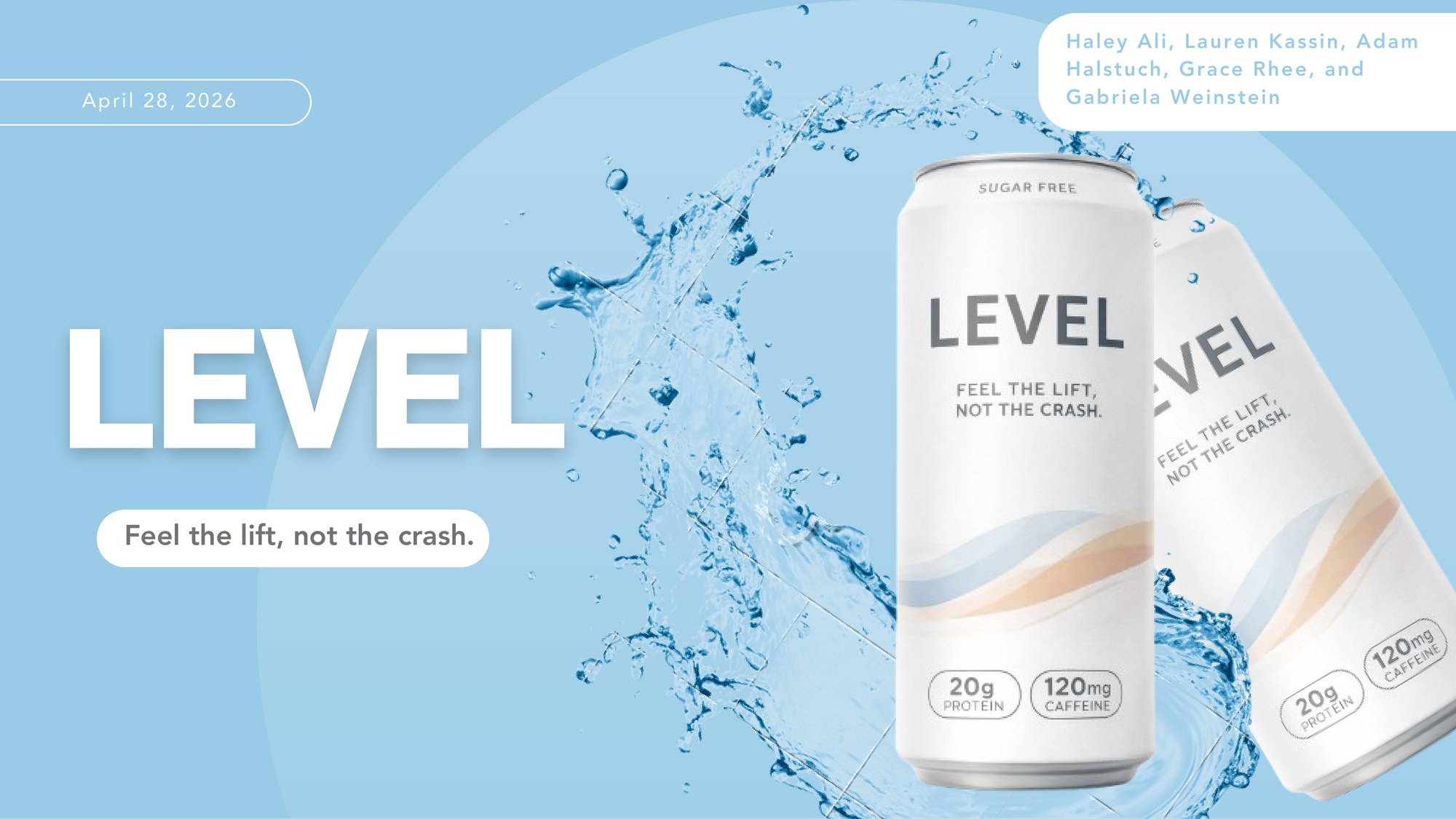
LEVEL — the brand we built: sugar free, 20g of protein, 120mg of caffeine.
The challenge
Competing with
a category leader.
For my Consumer Behavior course, my team was challenged to develop a new energy drink designed to disrupt the market and compete directly with Celsius.
The energy drink market is crowded, and Celsius has built a genuinely strong following among health-conscious and active consumers. Launching another can of caffeine into that category is not a strategy. Our challenge was to identify an unmet opportunity and build a brand that gave people a compelling reason to choose something new.
We used consumer behavior insight to build the product from the ground up — target consumer first, then the concept, the brand, and the positioning.
Don’t create another Celsius. Create a reason to switch.
Where we found the gap
Four trends the
category hadn’t stacked
Individually, none of these were new. What no one had done was put them in the same can — an energy drink that also worked as a protein product.
Cleaner formulas
Accelerated growth in organic and better-ingredient energy drink segments.
Stacked benefits
Better-For-You options — consumers expecting a drink to do more than one job.
Wellness focus
Consumers who engage in physical activity are more frequent energy drink users.
The protein trend
“Proteinization” — 15g+ of protein showing up across categories that never had it.
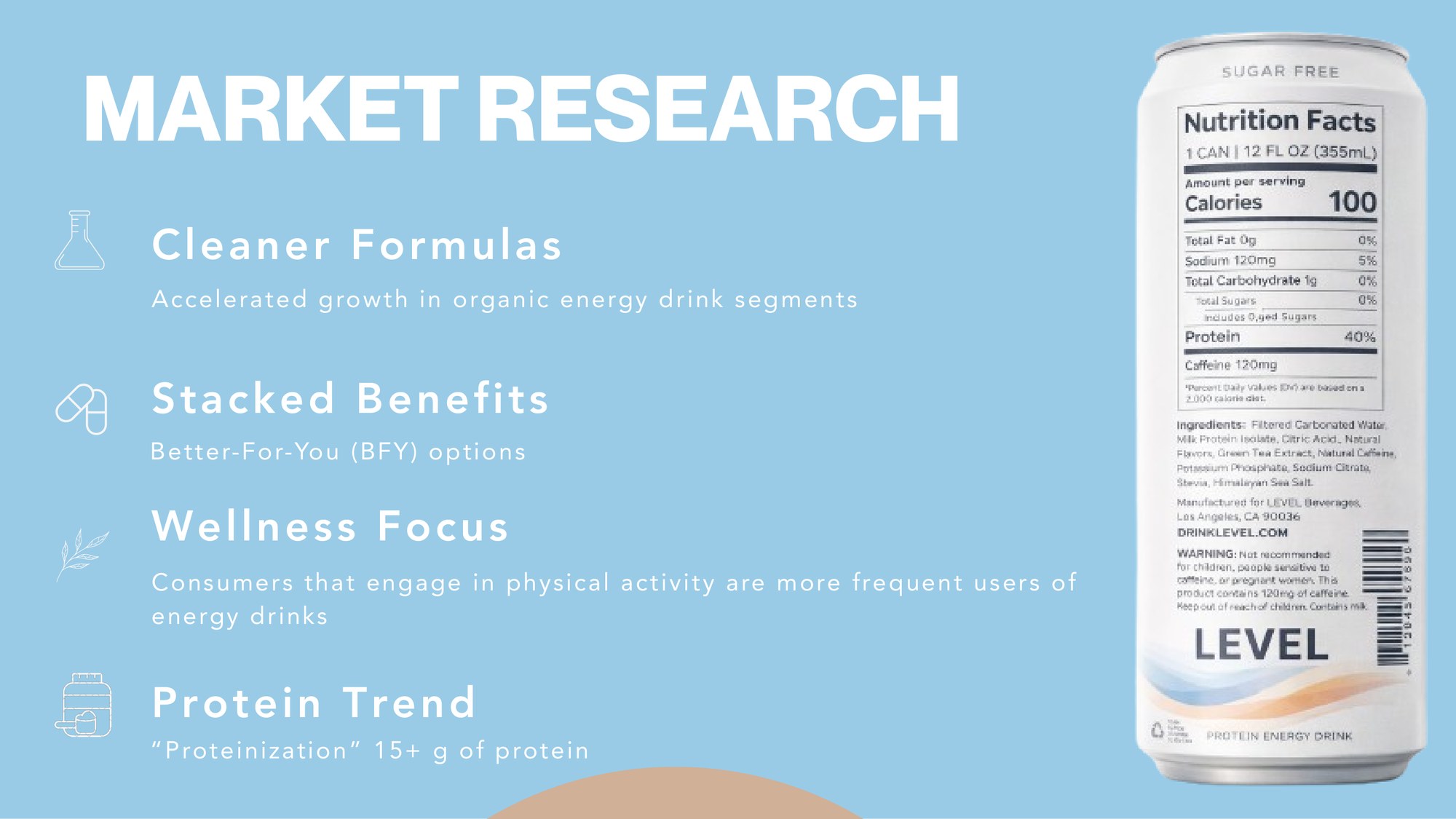
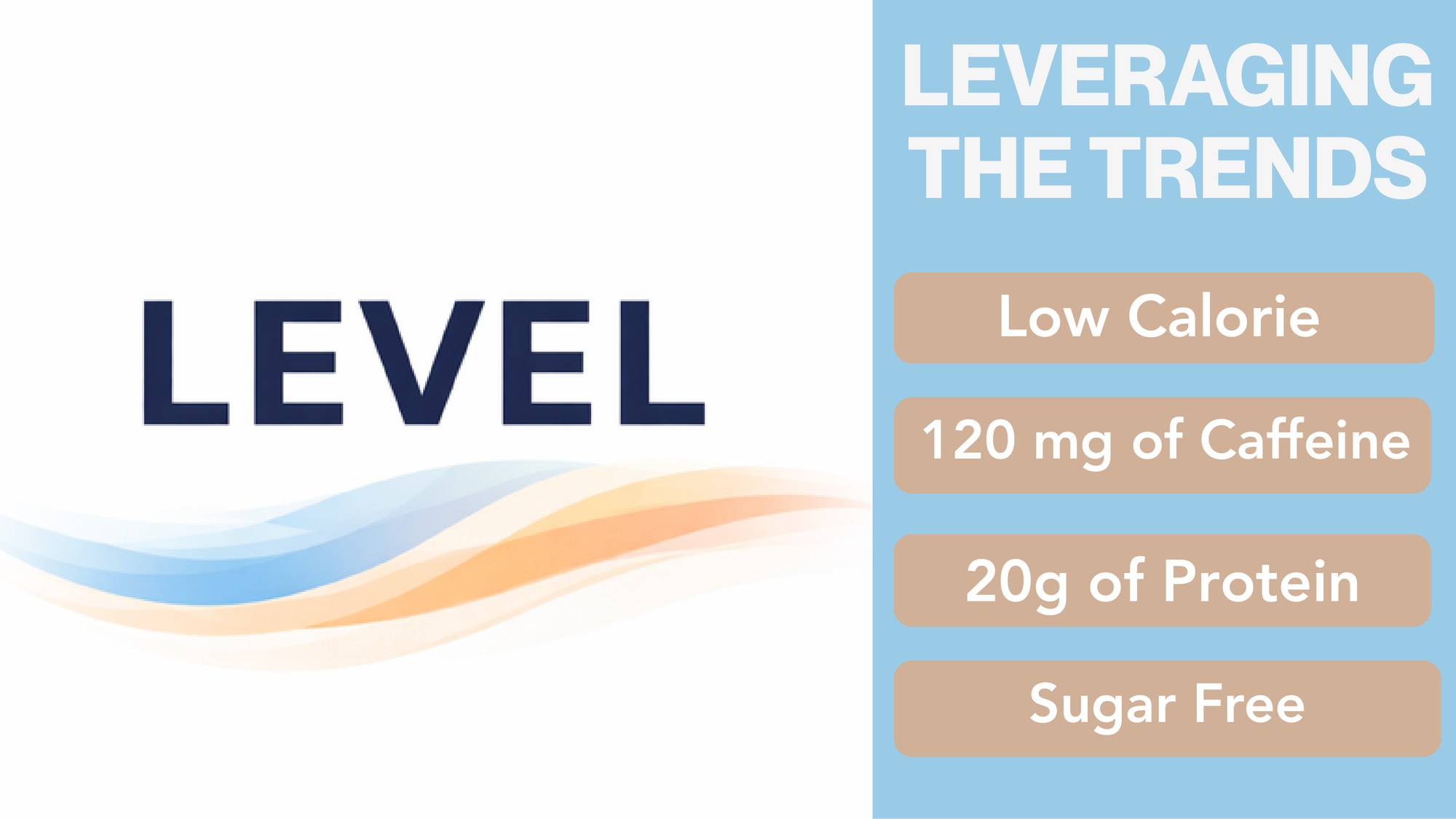
Market research, and the product spec we built out of it.
The product
Leveraging
the trends
Every number on the can came out of the research. The promise — feel the lift, not the crash — came out of what consumers said they disliked about the category they were already in.
Protein — the benefit no direct competitor was stacking
Caffeine — a real lift, deliberately not a maximum
Sugar — sugar free, and saying so where it counts
Calorie — so it fits the routine instead of interrupting it
Segmentation, targeting, positioning
Who LEVEL is for
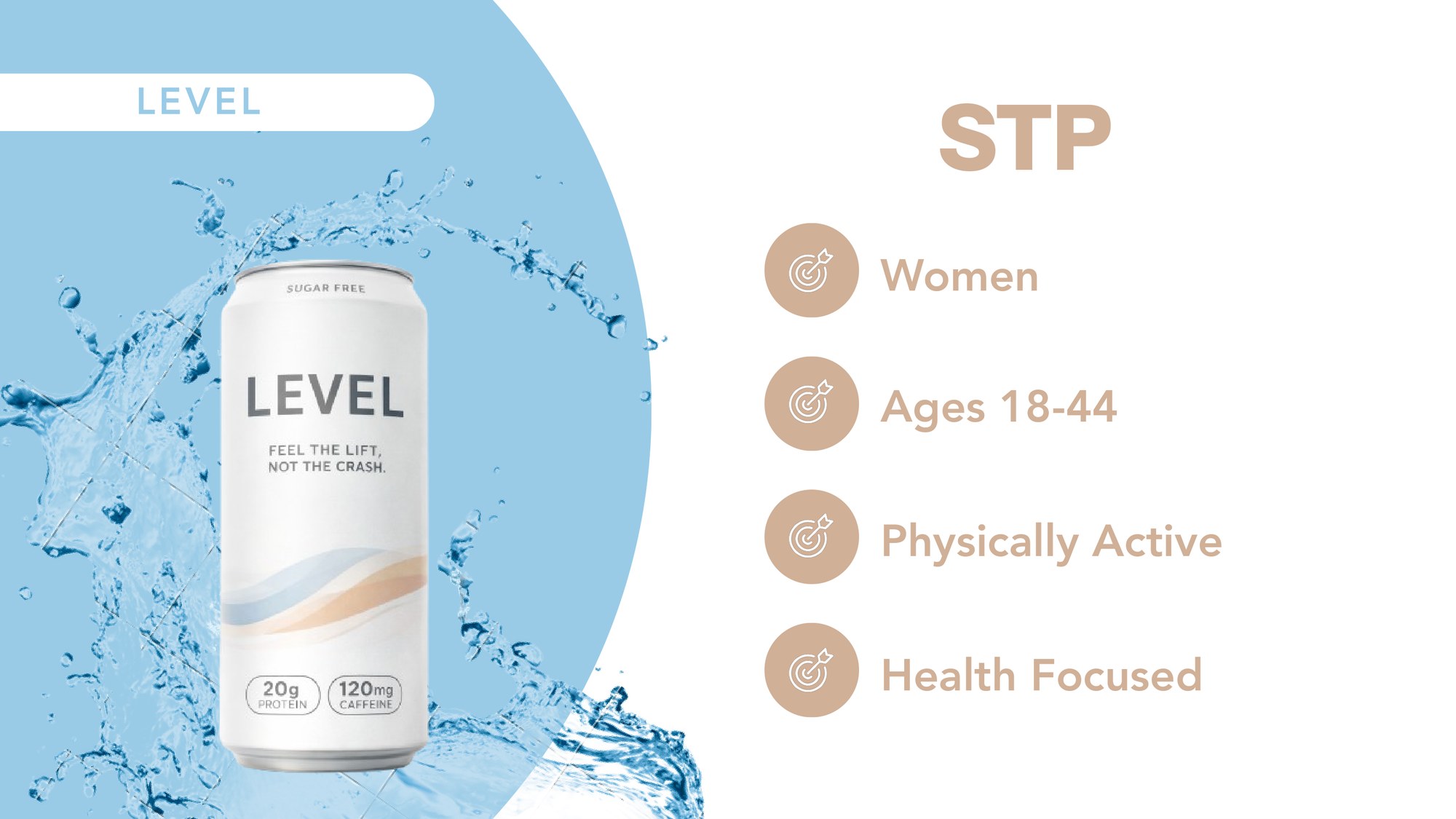
We didn’t target “energy drink consumers.” We targeted a specific person whose needs the category was serving only halfway.
- Women
- Ages 18–44
- Physically active
- Health focused
She already drinks energy drinks and she already tracks her protein. LEVEL lets her stop treating those as two separate purchases.
Our approach
From insight
to brand
The order mattered. We wanted the brand to be a consequence of the consumer, not a costume we put on a product afterwards.
Consumer insights
Analyzed what consumers actually value when choosing energy drinks, and the factors that drive the purchase decision at the shelf.
Competitive analysis
Examined Celsius and other major competitors to find the gaps — the benefits being claimed, and the ones nobody was combining.
Brand development
Built the identity, positioning, product concept and messaging around our target consumer — including the promise on the front of the can.
Go-to-market thinking
Considered how LEVEL could stand out through packaging, promotion and the overall consumer experience, not just the formula.
Course theory, applied
The lessons we actually used
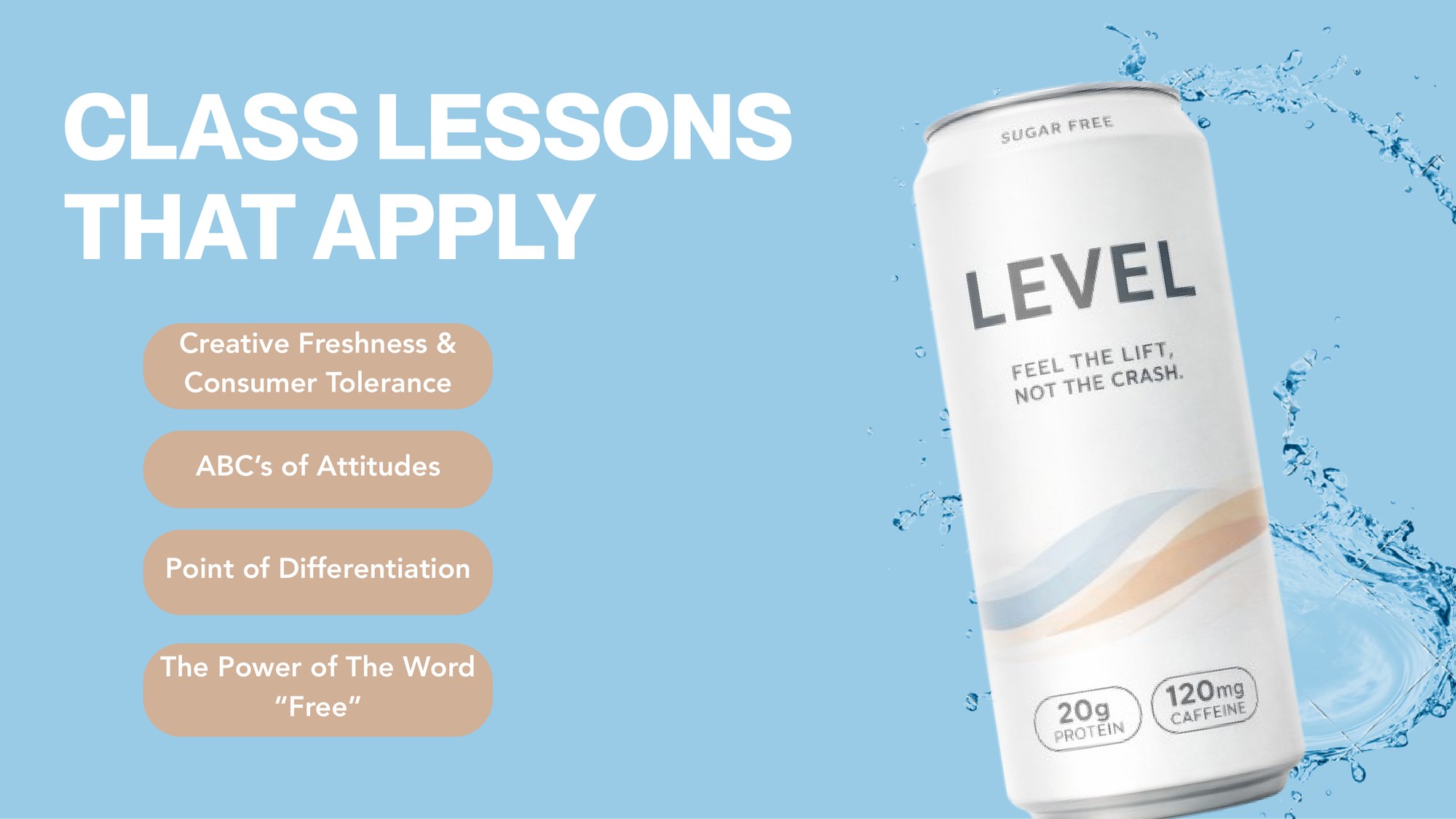
This wasn’t a branding exercise with theory bolted on afterwards. Four ideas from the course did real work in the decisions we made:
- Creative freshness & consumer tolerance — new enough to be noticed, familiar enough to be trusted.
- The ABCs of attitudes — affect, behavior and cognition, and which one we were trying to move.
- Point of differentiation — one clear reason to switch, not five reasons to consider.
- The power of the word “free” — why sugar free earns its place on the front of the can.
The takeaway
This project taught me how consumer insight becomes an actual brand strategy — not a slide about the consumer, but decisions you can point back to.
It also pushed me to think past what consumers currently buy and toward what would make them change their behavior. Competing with a dominant brand isn’t about matching it feature for feature. It’s about finding the one thing it isn’t doing for someone who is already loyal to it, and making that the whole point.
Team project: Haley Ali, Lauren Kassin, Adam Halstuch, Grace Rhee and Gabriela Weinstein.